Vida Tarver
The overall best air purifier for pets is the Levoit Vital 200S. Its high Clean Air Delivery Rate (CADR) combined with its heavy-duty pelleted activated carbon filter make it an excellent device for neutralizing strong odors. It also has a washable pre-filter that helps it trap large clumps of pet hair and dander, protecting the main True HEPA filter from clogging. These features as a whole make this device economical and highly effective for managing indoor air quality in households where pets are part of the family.
Table of Contents
Core Concepts
For a complete understanding of how air is purified in homes where pets live, there are a few key industry entities that you need to familiarize yourself with.
- True HEPA Filtration: This refers to High Efficiency Particulate Air filters that capture up to 99.97 percent of airborne particles, and these airborne particles include fine dander and shedding skin that can be as small as 0.3 microns.
- Activated Carbon: This is made up of porous carbon pellets whose function is to adsorb Volatile Organic Compound (VOCs), gases, and ammonia smells from litter boxes or urine that linger in the room.
- CADR (Clean Air Delivery Rate): Air purifier units filter dust, smoke, pollen, and other allergens at different rates. CADR is a metric that measures how fast they can do that based on a specific room size measured in Cubic Feet per Minute (CFM).
- Pre-filters: As the first line of defense in an air purification system, pre-filters catch large debris such as loose fur in order to protect the main/primary filters and help them last longer.
- Microns: While CADR measures the rate of air purification, microns measure the size of airborne pollutants. For example, the size of pet dander in microns ranges from 5 to 10 microns, meaning that it’s small and can be easily inhaled, making it a highly irritating pollutant to our lungs.
The Science of Managing Indoor Air Quality with Animals
As someone that shares their home with these lovely animals, you probably already know that their presence fundamentally changes the quality of your indoor air and its composition.
Cats often kick up microscopic silica dust each time they dig into their litter boxes, which is one of their favorite things to do. Dogs will shake off dander and dead skin cells into your living space everyday, and there’s nothing exciting about that.
What about birds? The fine powder down they produce spread all over surrounding surfaces before you can say Jack Robinson. Other pets like rabbits and hamsters like to scatter miniscule particles of hay and paper bedding into the surrounding air, making keeping your environment clean and maintaining a high degree of air quality almost impossible.
To tackle this challenge, a mechanical intervention is needed to trap the physical debris thrown into the air by our lovely animals and neutralize the volatile organic compounds that cause us so many problems.
To tackle the ammonia odors, you need a device that comes with a heavy pelleted carbon filter, and this has to be paired with a washable pre-filter to catch larger particles before they clog the True HEPA filter.
Thankfully, I’ve done the grunt work for you to find the right devices for your needs that possess all the features required to produce excellent results, and it took me hundreds of hours to complete. During the process, I analyzed clean air delivery rates, decibel outputs, and energy consumption metrics across tons of models, and in this guide, I’ll break down and reveal the top performing models.
I picked the top performers based on real-world testing and raw-data in households with multiple pets like mine.
Comparison Table: Top 5 Air Purifiers for Pets
In the table below, I compare my top 5 recommendations across the most important metrics of performance anyone in search of an air purifier should be concerned about.
| Product Name | Best For | CADR (CFM) | Noise Level (dB | Power Consumption (Watts) |
|---|---|---|---|---|
| Levoit Vital 200S | Pet hair, odors, and urine odor | 245 | 38.3 to 57.7 | 5.71 to 44.55 |
| Levoit EverestAir | Large rooms and multiple pets | 375 | 39.1 to 57.8 | 9.85 to 69.8 |
| Levoit Core 400S | Homes with pets and those looking for affordable options | 240 | 24.0 to 52.0 | 3.0 to 38.0 |
| Austin Air HealthMate | Smoke, smokers, pets, mold, and pet allergies/asthma | 156 | 42.5 to 61.5 | 61.1 to 147.6 |
| Coway Airmega AP-1512HH | Pets, dust, and cat litter smell | 247 | 38.9 to 60.1 | 3.7 to 75.3 |
The Top 5 Best Air Purifiers for Pets
In order to pick the right mechanical filtration system, you need to know the specific pollutants that your pets produce. For example, a home that houses three shedding Golden Retrievers will need a different type of device than an apartment where a single hamster lives.
I evaluated the models below by testing their clean air delivery rates, monitoring how many watts of power they consumed during operation, and recording the amount of noise they produced in decibels.
1. Levoit Vital 200S: Best Air Purifier for Pet Hair, Odors, and Urine Odor
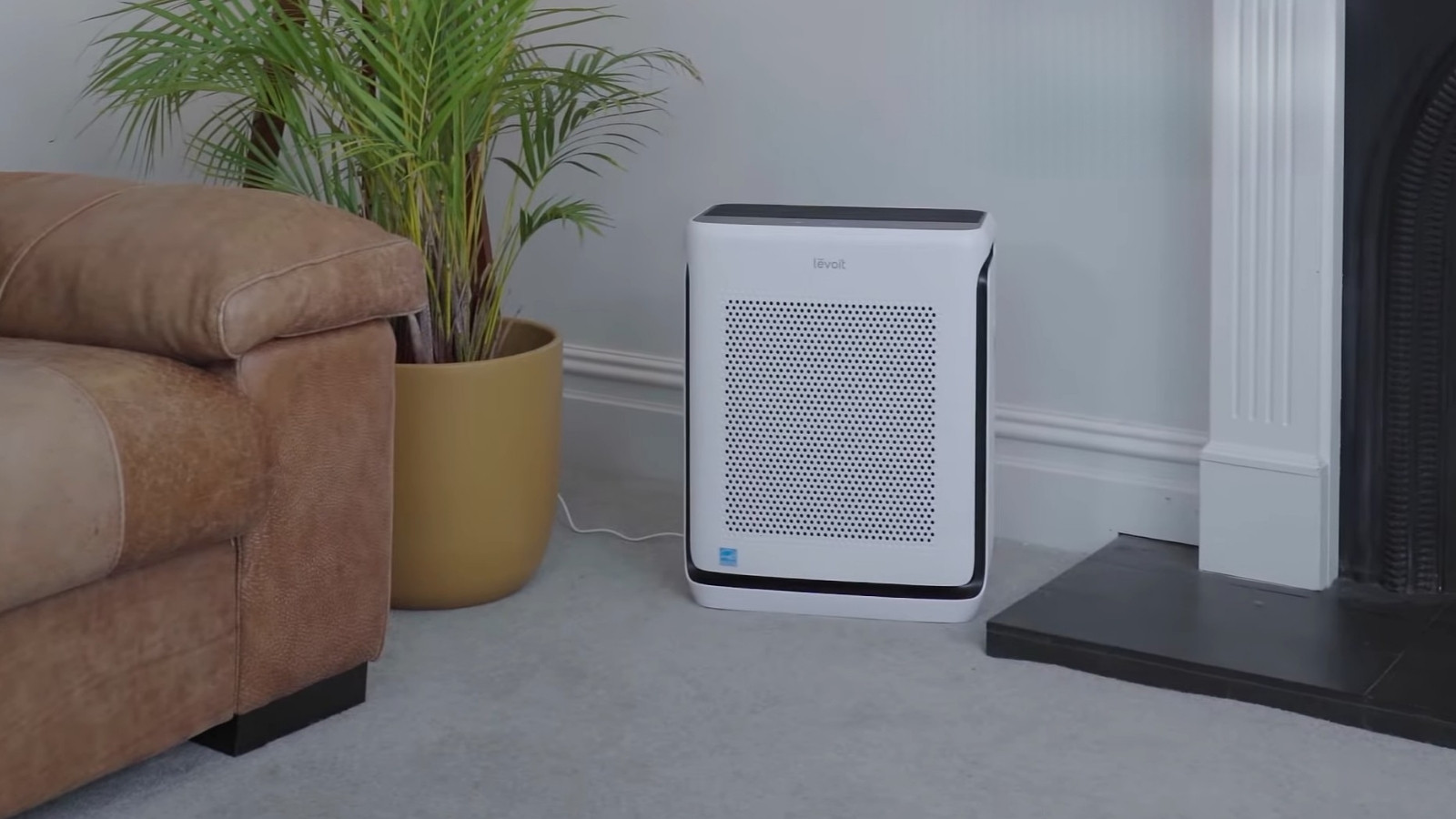
The Levoit Vital 200S is my overall #1 recommendation for anyone struggling with visible shedding and indoor smells that refuse to go away. This device has earned its place as not just the best air purifier for pet hair, but also the best model for pet urine odor and all odors in general, and this is mostly because of a specific design choice Levoit made for this model.
Instead of drawing air from a 360-degree cylindrical base, the Vital 200S has a wide U-shaped air inlet at the front that is designed to pull in heavy clumps of fur even before they land on the floor. During hands-on testing, I was surprised by how well the washable pre-filter trapped flying feathers from a cockatiel and thick hair from a shedding dog, proving that this device has a strong pre-filter.
The secondary layer is composed of heavy-duty pelleted activated carbon. As this filter contains actual carbon pellets and not the cheap carbon-dusted sheets you see in lower quality models, it’s able to effectively get rid of lingering urine odors by adsorbing the ammonia gases that are responsible for them.
The main reason why activated carbon is the superior filter is because it lasts much longer. It can continue to remove volatile organic compounds from the air for months. Carbon sheets, on the other hand, saturate within days.
Test Results:
- CADR: 245 cubic feet per minute at top speed
- Noise Level: 38.3 decibels on Speed 1 up to 57.7 decibels on Speed 4
- Electricity Consumption: 5.71 watts on Speed 1 up to 44.55 watts on Speed 4
- Filter Lifespan: 12 months
Pros:
- The pre-filter completely removable and washable. As a result of this, long-term replacement costs are surprisingly low.
- Its motors are highly energy-efficient, which means you spend less on electricity even when running it for hours daily.
- The Pet Mode setting on the VeSync app cycles fan speeds automatically for more efficient capture of fur and other debris.
Cons:
- The 57.7 decibels of noise it produces at maximum fan speed can be disruptive when the device is placed right next to a TV. Otherwise, it’s no big deal.
2. Levoit EverestAir: Best Air Purifier for Large Rooms with Pets and Multiple Pets
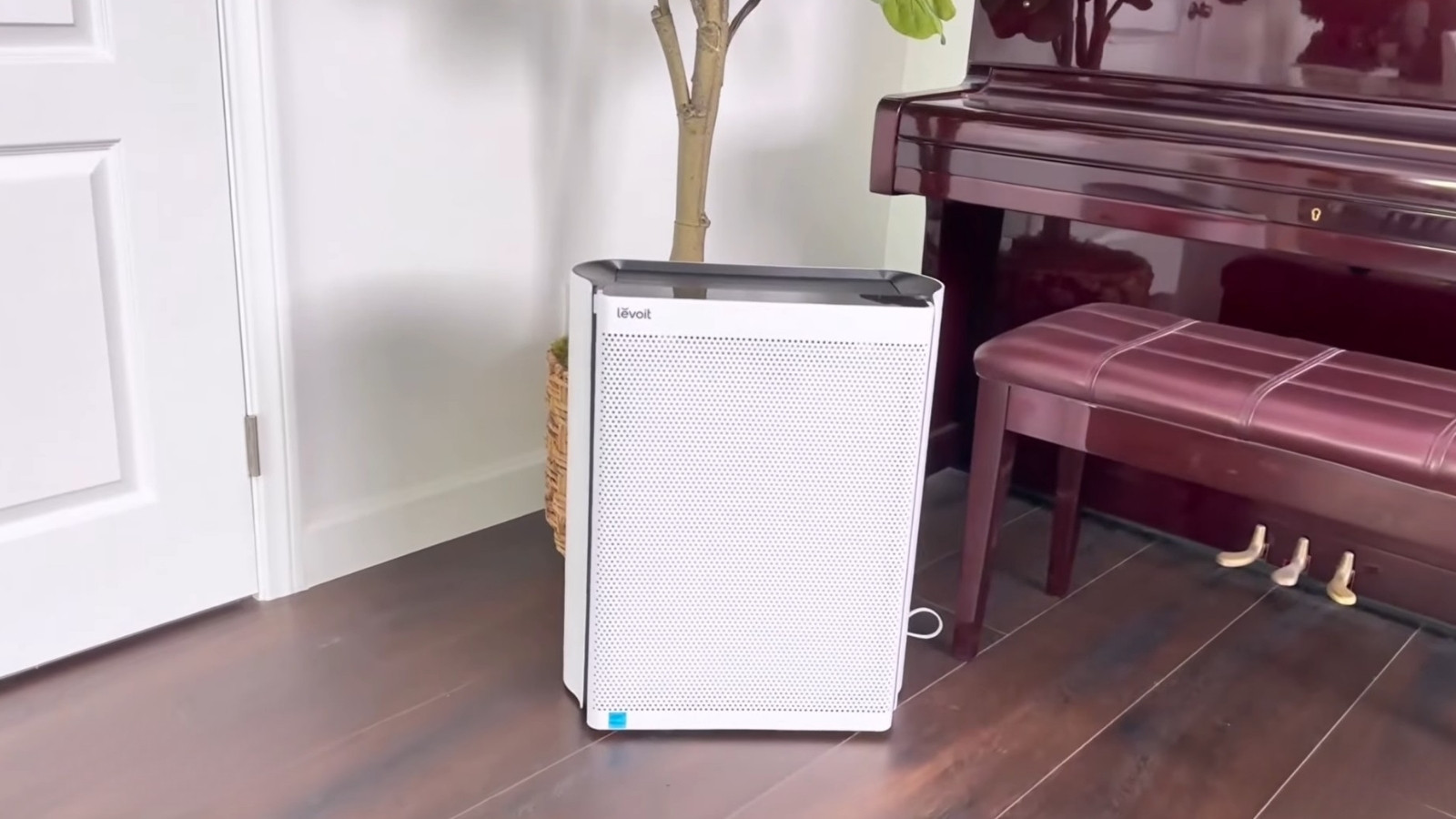
A massive amount of airflow is required to cycle ambient air effectively in large open-concept living spaces, and the Levoit EverestAir is my top pick for the best air purifier for large rooms with pets and for multiple pets due to it’s capacity to deliver the said amount of airflow.
With multiple animals in your home, the sheer amount of dander that needs to be removed from the air requires a model with a high Clean Air Delivery Rate. The EverestAir boasts a top speed CADR of 375 CFM, and this volume of raw power enables it to clear microscopic allergens across a 562 square foot room five times every single hour in a rapid fashion.
Its impressive speed isn’t the only reason for its high purification capacity, though. There’s a massive 400 grams of pelleted activated carbon inside of it too that enables it to handle such a massive workload.
Thanks to this payload, it’s able to neutralize strong odors in, for example, living rooms containing several rabbit enclosures, homes with multiple cats, etc. You can adjust the angle of the vents to direct clean airflow to the exact spots where it’s most needed, and that’s another great feature that makes the EverestAir a superb device for circulating clean breeze throughout your home.
Test Results:
- CADR: 375 CFM at top speed
- Noise Level: 39.1 decibels on Speed 1 up to 57.8 decibels on Turbo
- Electricity Consumption: 9.85 watts on Speed 1 up to 69.8 watts on Turbo
- Filter Lifespan: 12 to 15 months
Pros:
- Offers incredible square footage coverage without the disadvantage of a huge physical footprint.
- The laser dust sensor has amazing precision and reacts instantly to events, such as a dog shaking its coat.
- Thanks to its filter’s thick carbon density, it handles wet dog smells like a champ.
Cons:
- It will set you back a significantly higher amount of money to purchase compared to standard residential models.
3. Levoit Core 400S: Best Home Air Purifier for Pets and the Affordable Choice
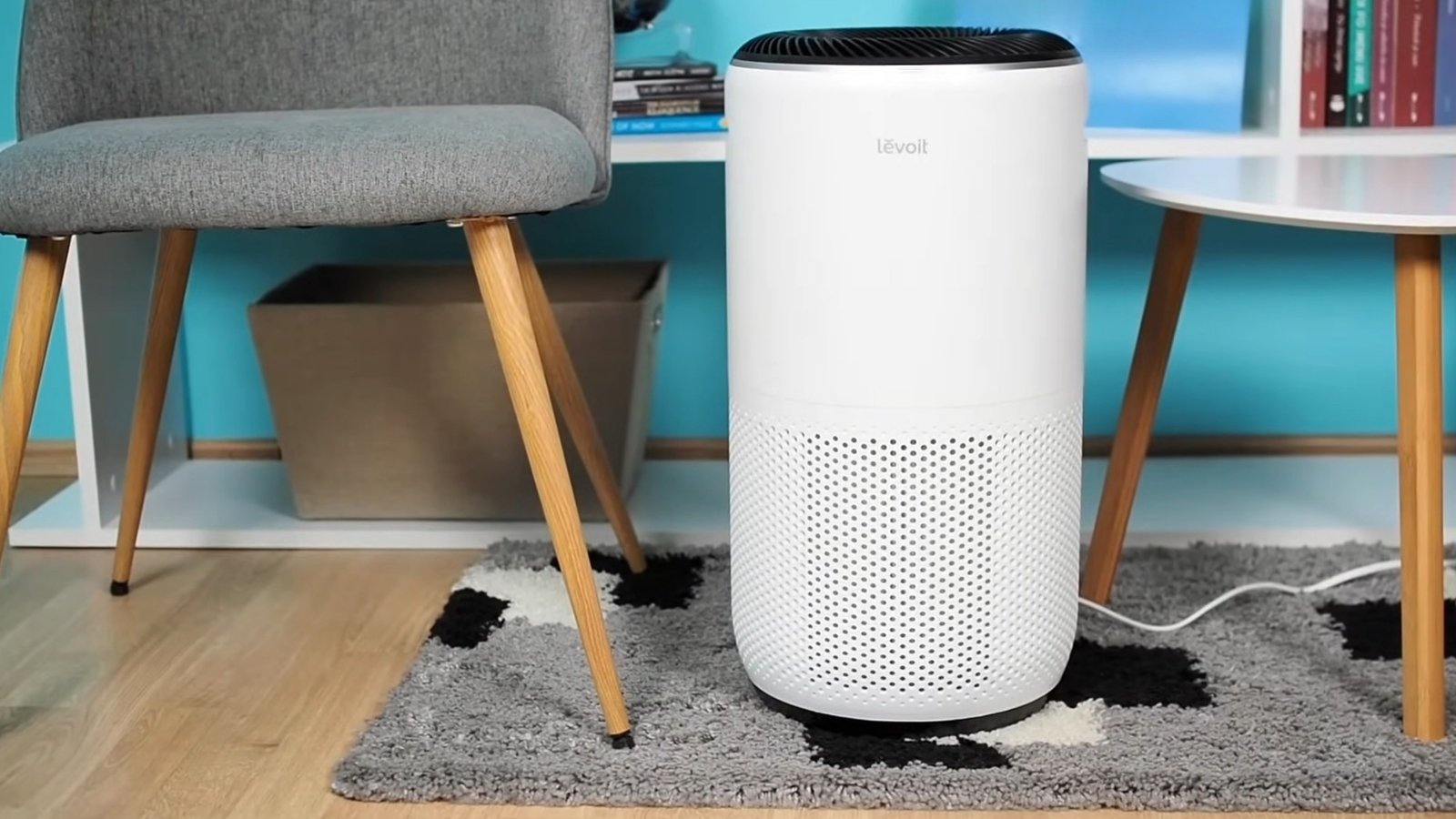
Not everyone can just pull out their credit card and purchase any home appliance no matter the cost. If you are budget-concious and need an affordable model that perfectly balances filtration performance with price, the Levoit Core 400S is the best affordable home air purifier for pets.
One of my favorite features of this device is its compact cylindrical design (the reason why it takes up very little floor space). As a result of its small footprint, you can easily tuck it into a corner near an armchair or a dog bed. That said, this is still a powerful device, so don’t let its size and price fool you. It delivers a solid CADR of 240 CFM, and it proved to be remarkably efficient during my testing. I monitored its electricity consumption; it only pulled 38 watts on its highest setting.
Levoit offers a custom Pet Allergy replacement filter which is a specialized filter that comes with extra carbon for the specific purpose of handling volatile organic compounds associated with animal waste. Kudos to Levoit for giving its customers the ability to customize this product.
Test Results:
- CADR: 240 CFM at top speed
- Noise Level: 24.0 decibels in Sleep Mode up to 52.0 decibels on Speed 4
- Electricity Consumption: 3.0 watts in Sleep Mode up to 38.0 watts on Speed 4
- Filter Lifespan: 6 months
Pros:
- The VeSync smartphone app integration furnishes you with real-time air quality updates and provides scheduling functionality.
- In sleep mode, it operates at quiet sub-30 decibel levels but still moves a respectable amount of air throughout the room.
- It has a beautiful design that easily blends into modern living spaces.
Cons:
- The filter requires replacing every six months, and some people might consider this too frequent. This also means you’ll spend more on ongoing maintenance over time compared to models whose filters last longer.
4. Austin Air HealthMate: Best Air Purifier for Smoke, Pets, Mold, and Asthma
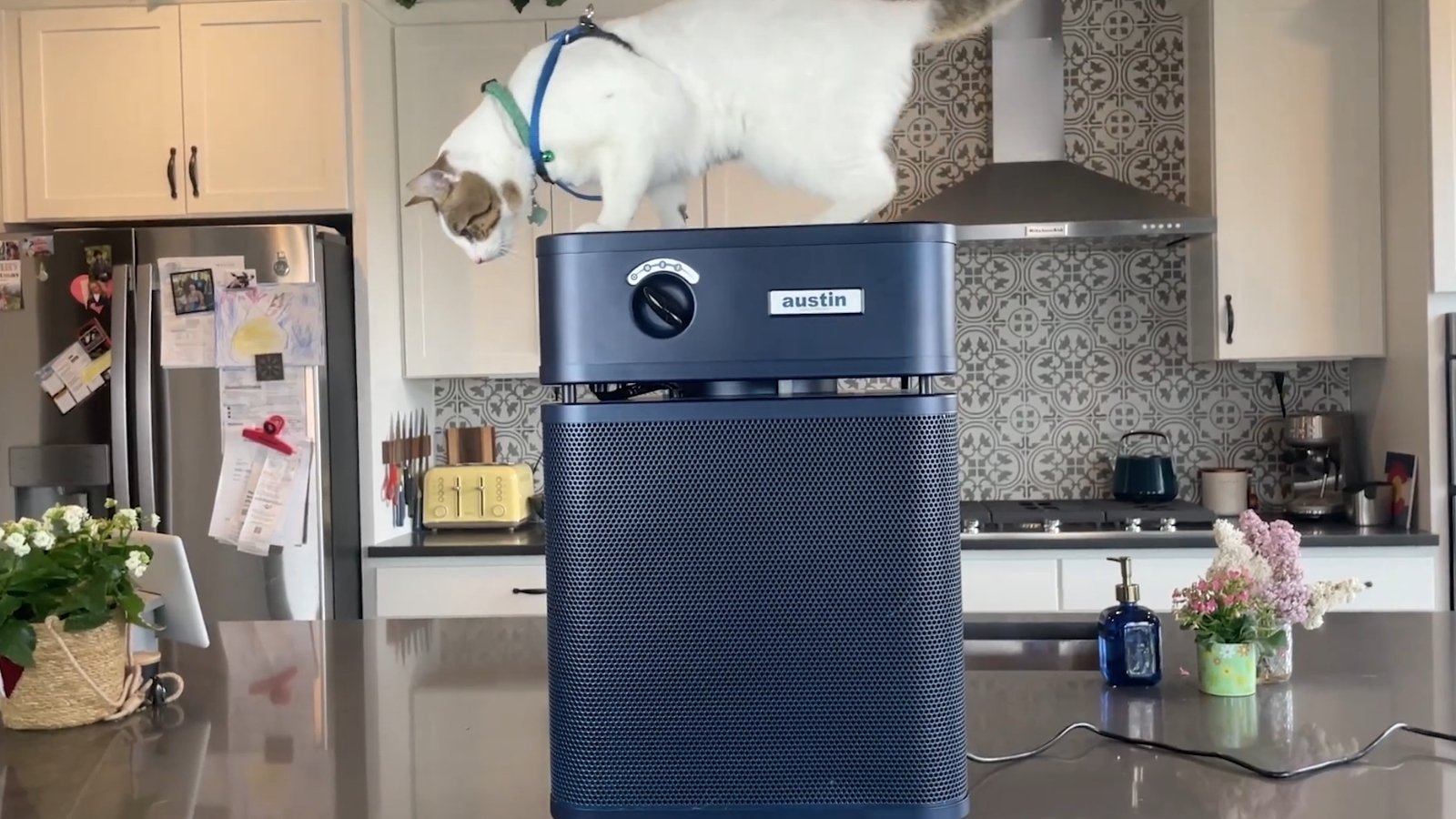
Dealing with severe respiratory sensitivities while still keeping a pet at home? You’ll need an air purifier like the Austin Air HealthMate to restore your sanity. Although, the other devices I recommend here can work well for these issues, this is my #1 pick for smoke, pets, mold, allergies, and asthma.
This is a heavy-duty steel machine that focuses on delivering raw mechanical filtration rather than modern smart features. An astonishing 15 pounds of activated carbon and zeolite mix do the grunt work behind the scenes to help you breathe better. This chemical mix is capable of pulling mold spores, hazardous gases, and heavy smoke out of your home with unmatched effectiveness.
The filter inside the Austin Air HealthMate isn’t just any filter; it’s a medical-grade HEPA filter that excels at trapping fine dander down to 0.3 microns. The result of all this power is immense relief for anyone suffering from chronic asthma or anyone that’s unable to tolerate standard household air.
Nothing passes through this machine without being scrubbed completely clean. The sheer weight of its filtration system makes sure of that.
Test Results:
- CADR: 156 CFM at top speed
- Noise Level: 42.5 decibels on Speed 1 up to 61.5 decibels on Speed 3
- Electricity Consumption: 61.1 watts on Speed 1 up to 147.6 watts on Speed 3
- Filter Lifespan: 5 years
Pros:
- A filter with a 5-year lifespan means way less effort and money spent on maintenance, which is just amazing.
- Its capacity to neutralize complex volatile organic compounds and stubborn odors is unrivaled. It’s that good!
- It’s almost impossible to damage thanks to its practically indestructible steel casing. It can survive the impact of large jumping dogs and other animals.
Cons:
- You save on maintenance, but spend more on electricity. On its highest setting, it pulls a huge 147.6 watts of electricity, and you’ll definitely notice the increase in your monthly utility bill if you use it regularly.
5. Coway Airmega AP-1512HH: Best Air Purifier for Pets, Dust, and Cat Litter Smell
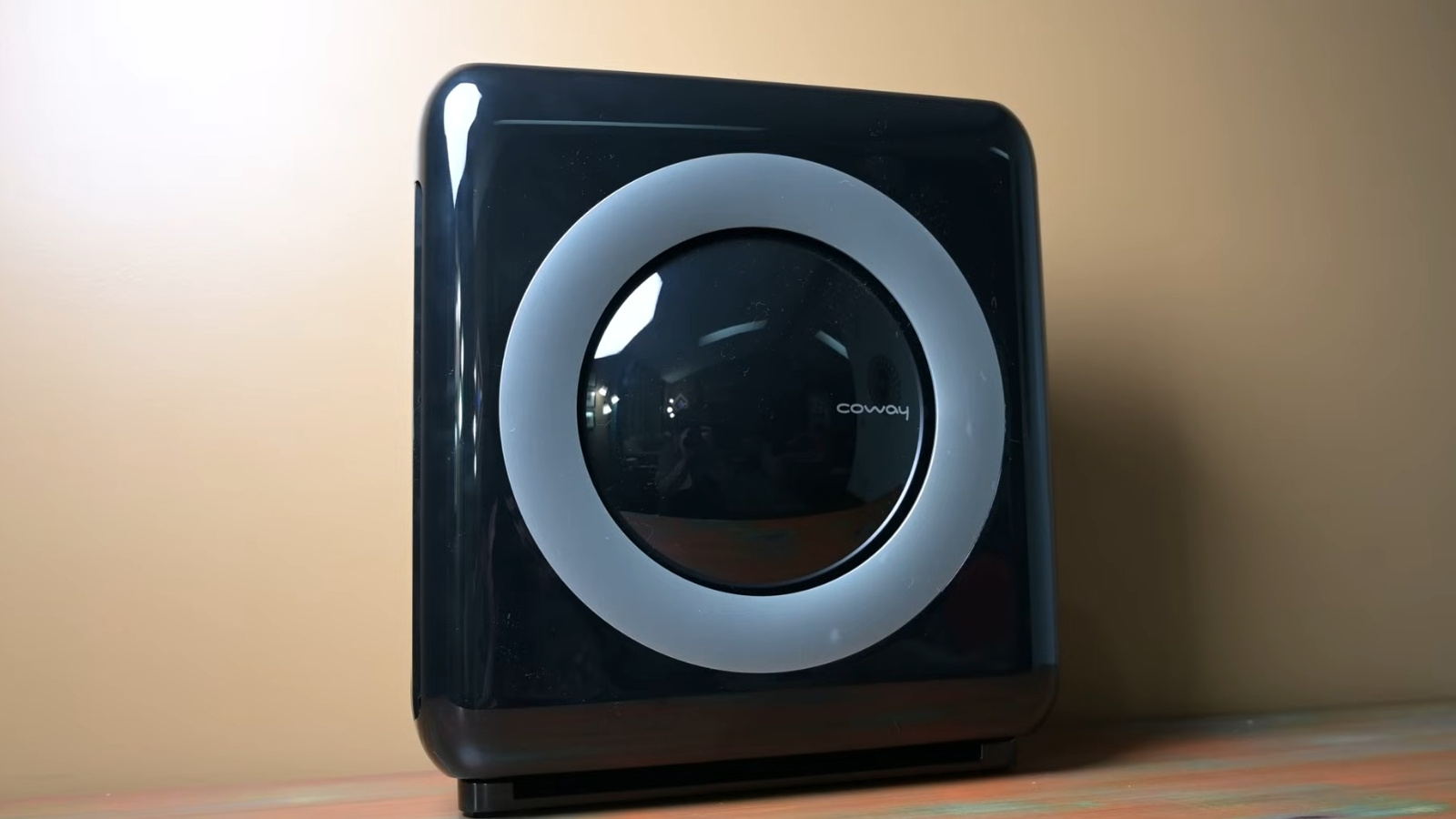
Targeted filtration is required to manage the localized debris created by specific animal zones, and the Coway Airmega does that well.
If you place it directly adjacent to a litter box, it captures the microscopic silica dust that cats kick into the air as they dig into their litter boxes. A pre-filter paired with a True HEPA layer trap the particulate matter quickly and purify the surrounding air for better breathing.
This machine boasts an official AHAM dust CADR of 247 CFM thanks to its internal activated carbon filter that works fast to neutralize feline waste odor and the sharp ammonia scent associated with it before it permeates your entire home.
I like the square design of this machine and how compact it is. While testing it, I pushed it flush against the wall in my tight laundry room where I keep my cats’ litter boxes, and it fit perfectly.
Test Results:
- Dust CADR: 247 CFM at top speed
- Noise Level: 38.9 decibels on Speed 1 up to 60.1 decibels on Speed 3
- Electricity Consumption: 3.7 watts on Speed 1 up to 75.3 watts on Speed 3
- Filter Lifespan: 6 months
Pros:
- The built-in Eco mode turns the fan off automatically when no pollution is detected. This helps save energy throughout the day and consequently lower your bills.
- It fits easily into tight spaces, and it won’t block walkways thanks to its compact profile.
- You can turn off the ionizer function manually. You’ll appreciate this feature more if you keep birds, as it’s a vital safety feature.
Cons:
- Lowering the speed of the fan from speed 3 down to speed 2 decreases air cleaning performance considerably.
The Runners-Up: 5 More Excellent Air Purifiers for Pets
You’ve read about my top 5 models, and these are the models that offer the best balance of performance and value, but they may not necessarily be the best options for your specific situation.
If none of my top 5 recommendations are suitable for your specific situation, these five runners-up are excellent alternatives to consider. They underwent the same rigorous tests as the ones above, and they are high-quality machines themselves, meaning that their performance is miles better than that of generic brands.
6. Rabbit Air MinusA2: Best HEPA Air Purifier for Pet Allergies
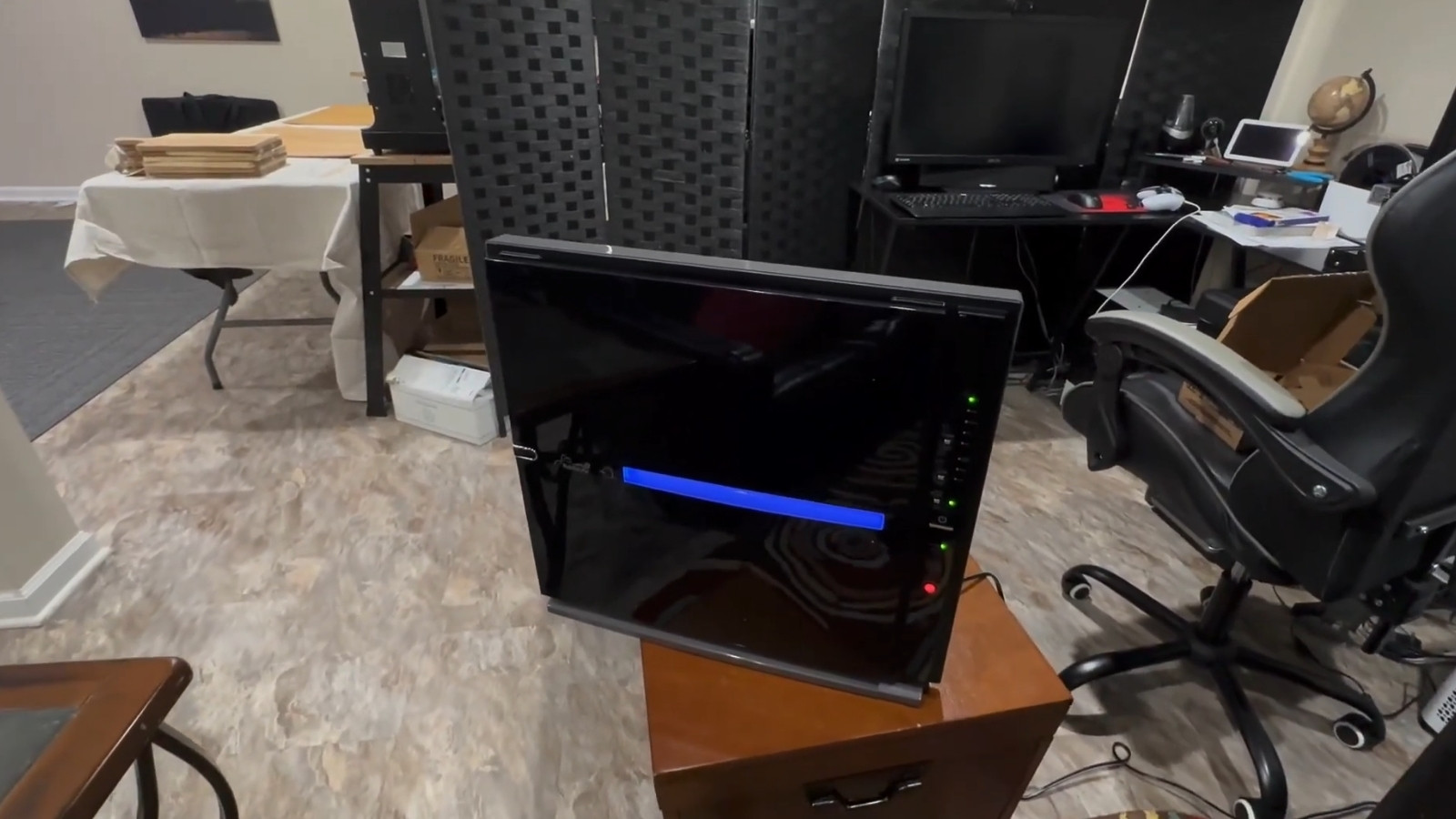
If floor space is limited in your apartment or home, the Rabbit Air MinusA2 is the right device for you. This is because it’s wall-mountable, draws air from a large surface area, and features a robust six-stage filtration system that effectively deals with allergens.
Customization is also a possibility here, as this unit allows you to customize one of its filter layers. The custom filter layer is designed to target the proteins in pet dander and saliva that trigger immune reactions in humans.
If you have little pups, you’ll be happy to know that this machine hugs the wall securely and protects electrical cables from small explorers on a mission. It’d be remiss of me to talk about this air purifier without mentioning its build quality. If I were to describe it in one word, I’d say it’s “exceptional”. Its sleek, flat-panel look complemented my home perfectly like modern wall art, and I’m sure it will yours.
Test Results:
- CADR: 200 CFM for Pollen, 193 CFM for Dust, and 180 CFM for Smoke
- Noise Level: 25.6 to 51.3 decibels
- Electricity Consumption: 7 to 61 watts
Pros:
- All the hardware you need to mount it on the wall is included in the box. This frees up valuable floor space especially if yours is limited.
- It’s very quiet on its lowest setting, so you can sleep soundly while it runs.
- A light sensor is built in to dim the LED display in dark rooms.
Cons:
- The complex multi-stage setup of its filtration system increases the cost of annual filter replacement.
7. Winix 5510: Best Air Purifier for Pets with Washable Filter
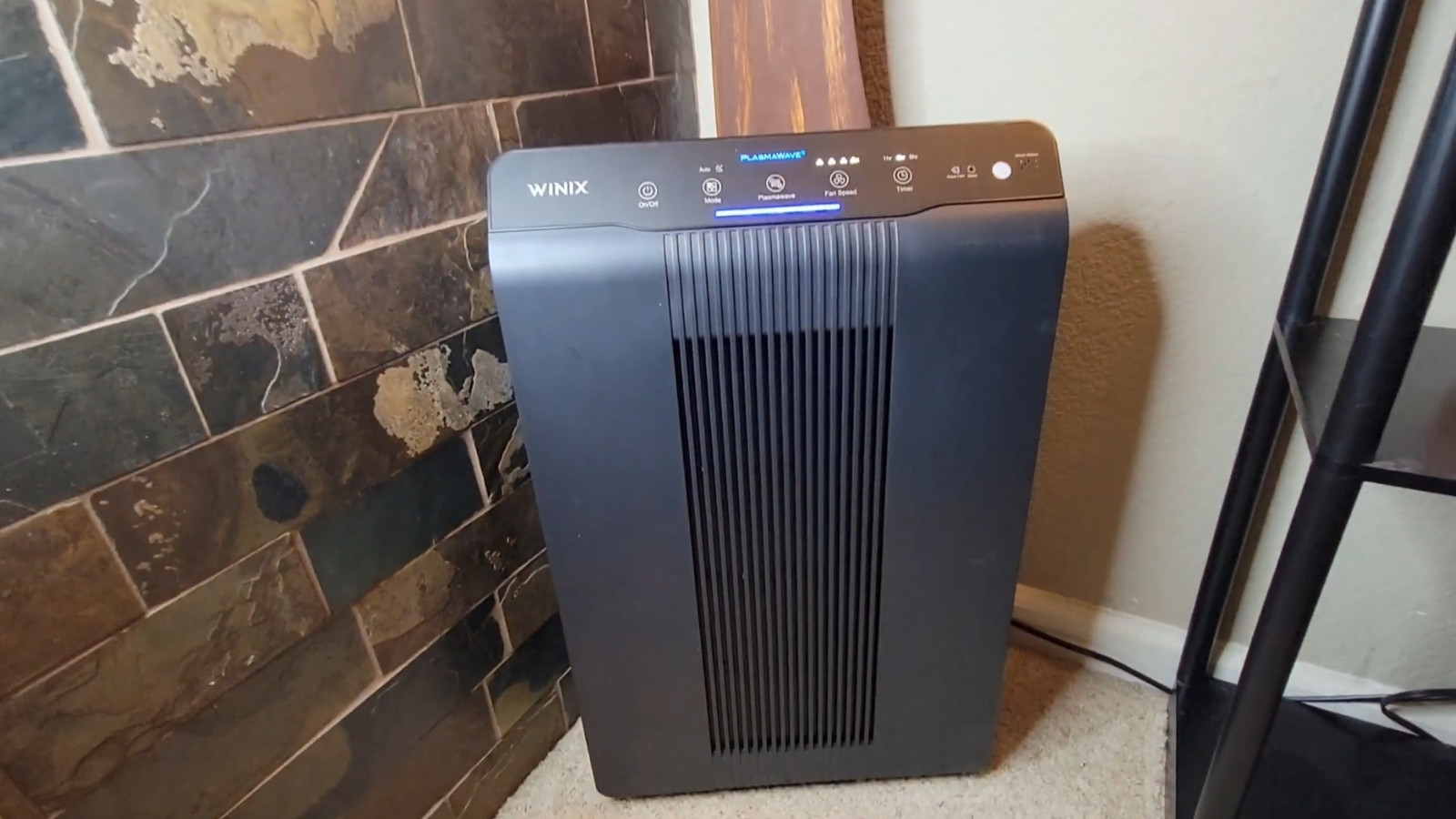
If you like Winix products, you’ve probably heard of the 5500-2 model, a really popular model that has now been discontinued. The Winix 5510 is the successor to the 5500-2 model, and it’s better in every way. It takes everything consumers loved about its predecessor and offers it all and more in a sleek, modern chassis.
The most prominent feature of the 5510 is its ultra-fine mesh pre-filter. This tight mesh filter performs exceptionally well compared to cheap foam variants, and catches thick undercoat hair with ease. It’s washable too, so you can simply rinse it clean in a sink when the need arises, and the filter doesn’t degrade even after years of doing this.
Winix offers a True HEPA filter and a specialized washable pelleted carbon filter in this model that sit behind the pre-filter and provide exceptional odor control that standard carbon sheets can’t match.
If you want to save money on filter replacement, this machine is one of the most budget-friendly options you can use over a five-year lifespan, and the credit goes to its dual washable filters. If you find that the 5510 isn’t available, you can buy the 5520. Both are basically the same product aside from a few minor differences in design.
Test Results:
- CADR: 248 CFM at top speed
- Noise Level: 35.2 decibels in Sleep Mode up to 67.2 decibels on Speed 4
- Electricity Consumption: 4.59 watts on Speed 1 up to 53.94 watts on Speed 4
Pros:
- The Winix 5510 has lower maintenance costs. Its washable pre-filter and carbon-filter means you’ll spend less on filter replacement in the long run.
- Has a smart app that enables you to monitor it remotely from your smartphone.
- The PlasmaWave technology (Winix’s ionization feature) can be turned off so you can enjoy pure mechanical filtration.
Cons:
- 67.2 decibels of noise at maximum speed is a lot louder than other similar models, and this can be a drawback for some.
8. Levoit Core 300S: Best Small Air Purifier for Pets
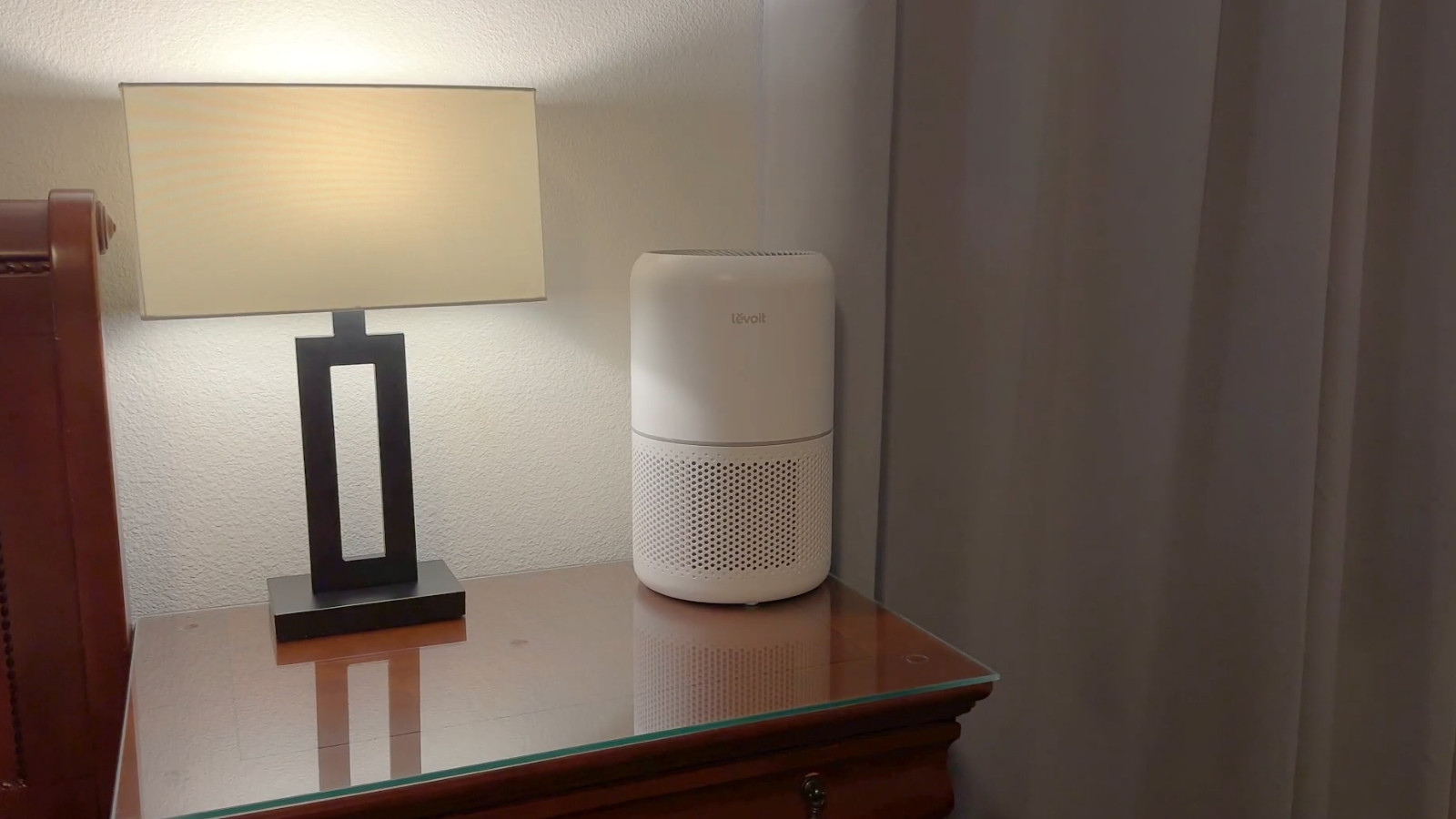
You don’t always need a massive industrial fan in your home. Sometimes all you need is a smaller device for targeted filtration next to a small pet, and the Levoit Core 300S is my top recommendation for such situations.
With a height of just 14.2 inches, this compact cylinder is the perfect size to place on a side table next to a hamster cage, rabbit hutch, ferret habitat, or small dog/cat. Once it’s positioned in the right place and turned on, it immediately gets to work, efficiently capturing tiny particles of paper bedding, timothy hay dust, and other allergens you’ll regularly find small animals kicking into the air.
Although this is a small air purifier, don’t let its size fool you, as it carries a True HEPA filter inside that small casing which locks away fine dander for good before it spreads all over your home.
Test Results:
- CADR: 134 CFM for Dust, 126 CFM for Smoke, and 154 CFM for Pollen
- Noise Level: 38.9 decibels on Speed 1 up to 54.5 decibels on Speed 3
- Electricity Consumption: 5.9 watts on Speed 1 up to 21.8 watts on Speed 3
Pros:
- With a power draw of just 21.8 watts on its highest setting, this is one of the most energy-efficient machines you’ll come across among the high quality models.
- It’s ideal for small home offices, studio apartments, and bedrooms due to its compact footprint.
- Has your cat ever changed your fan speed? They can’t with this one, as the display lock prevents that from happening when a cat walks across the top panel.
Cons:
- Not for large open living rooms, as it lacks the raw airflow required to clean large spaces.
9. Blueair Blue Pure 211i Max: Best Air Purifier for Pet Dander and Smells
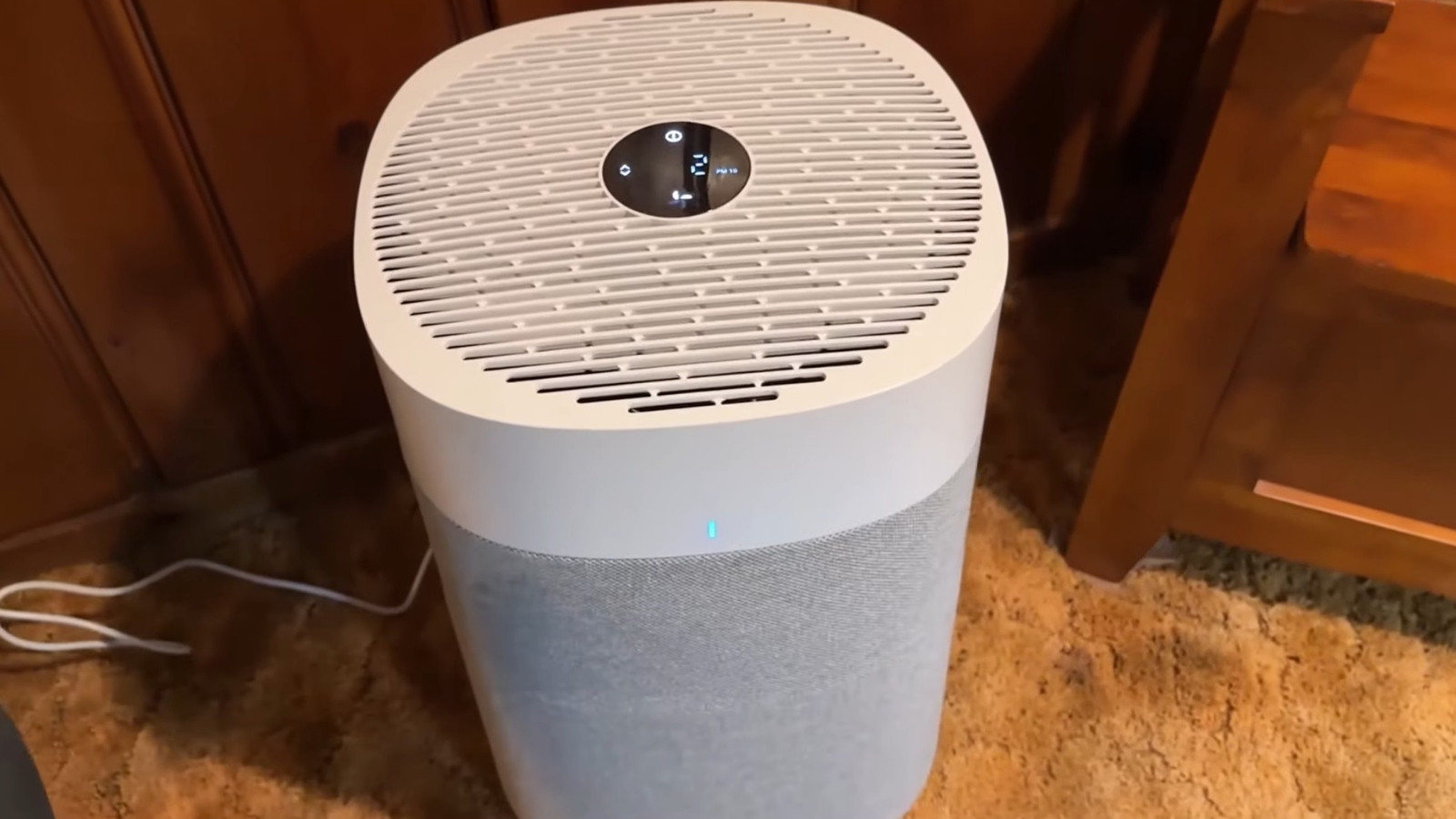
Having rescued multiple cats in the past and kept a trio of heavily shedding Huskies, I’ve been in situations where I had to throw nuance out the window. In the aforementioned situations, I didn’t think about fancy details like aesthetics or smartphone apps.
All I wanted was the pure and raw power of a quality air purifier and its high-velocity airflow to rid the air of all that dander, hair, and smell without it sounding like a jet engine. That was when I discovered the Blueair Blue Pure 211i Max, an absolute powerhouse for this purpose.
This machine features Blueair’s proprietary HEPASilent technology, which combines mechanical filtration with an electrostatic charge to catch 99.97% of airborne particles, bacteria, and viruses, rather than force air through a traditional dense HEPA block. This combination helps it move a huge amount of air very quickly without overworking the internal motor.
I know I mentioned not caring about aesthetics or smartphone apps when I discovered this machine, but it’s absolutely sleek and beautiful, and it has a smartphone app too. I just didn’t consider these features while purchasing it back then.
One major advantage of this machine is the fact that its washable pre-filter sits on the outside, not the inside of the machine. This means you can vacuum off pet hair before it gets inside and reduce how often you have to wash it. The main particle filter behind the fabric pre-filter pairs with a carbon layer to make light work of stubborn wet dog scents, keeping the air clean and fresh.
Test Results:
- CADR: 410 CFM for fine smoke, dust, and pollen
- Noise Level: 23 decibels on low up to 53 decibels on high
- Electricity Consumption: 4 watts on low up to 38 watts on high
- Filter Lifespan: 6 to 9 months
Pros:
- It moves a significant amount of air rapidly and makes light work of purifying heavily polluted environments and open floor plans up to 635 square feet (AHAM-certified).
- On its maximum setting, it pulls a mere 38 watts, making it an extremely energy efficient machine that saves you money on your monthly utility bill.
- Customizable pre-filter colors let you style it your way.
Cons:
- Seeing as the activated carbon layer in this machine is thinner than the heavy-duty pelleted options present in some competing models, it might struggle with highly concentrated litter box ammonia. However, it handles everyday pet smells like a champ.
10. Smart Air SA600: Best Quiet Air Purifier for Pets and Allergies
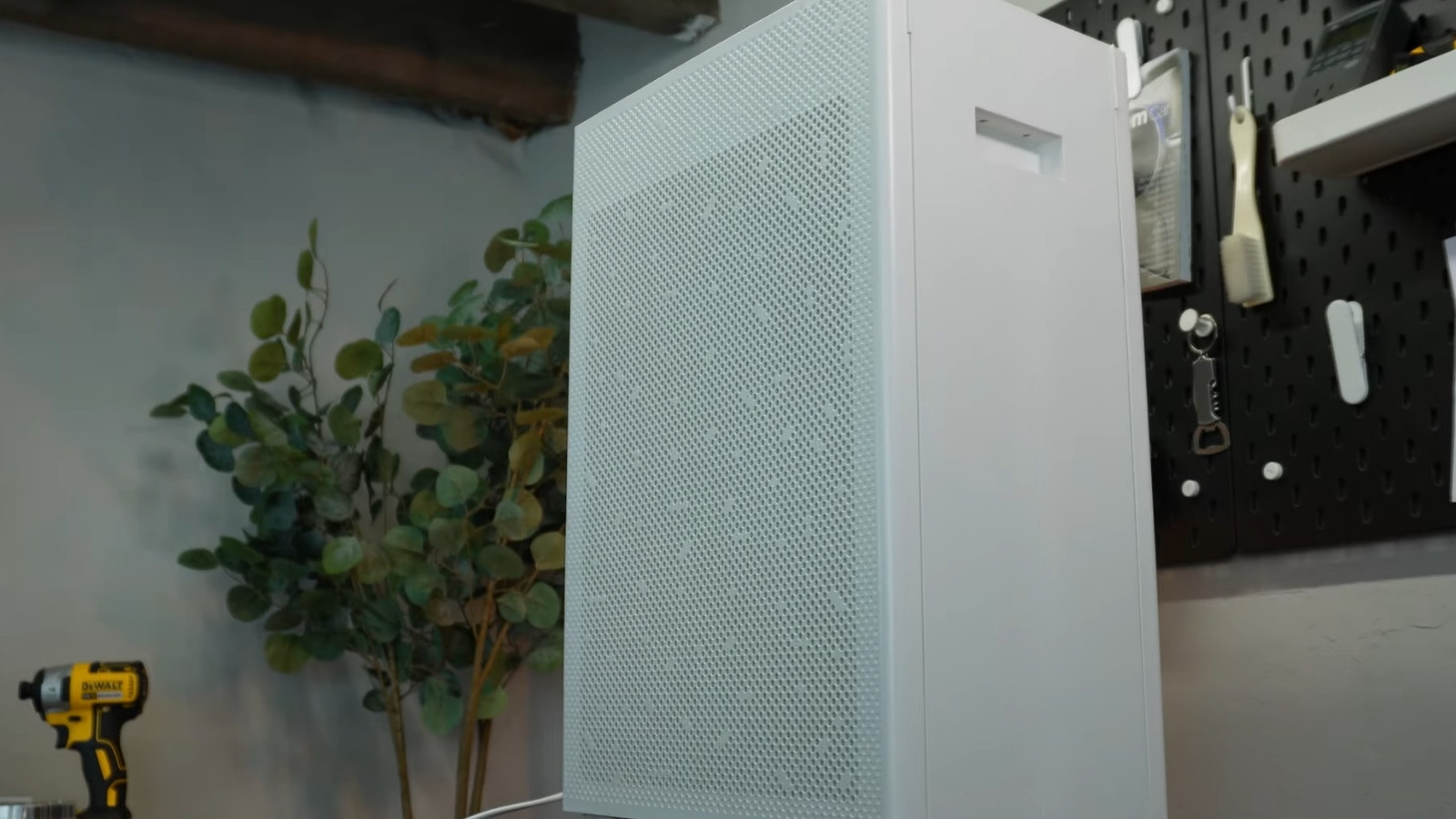
Sharing your bedroom with your pets almost always requires you to keep your air purifier in your bedroom, so picking a machine that doesn’t sound like a jet engine while still cleaning the air effectively is of crucial importance, particularly if you’re a light sleeper.
The Smart Air SA600 is an engineering marvel and easily one of the best choices you can make if you need a quiet device.
This is how the Smart Air SA600 works: It pulls dirty air in through two separate sets of medical-grade H13 HEPA and activated carbon filters. This dual-inlet design doubles the filtration surface area as it draws air in from both sides, leading to high airflow with less fan spinning.
The dual air inlet design also helps it achieve a noise level of 45 decibels or less on most settings while still pushing an impressive volume of clean air. In addition to that, this machine doesn’t use ionizers and smart apps; it’s a strictly mechanical machine that focuses only on filtration, and it does it well.
Test Results:
- CADR: 299 CFM at top speed
- Noise Level: 24 decibels on Speed 1 up to 53 decibels on Speed 5
- Electricity Consumption: 3 watts on Speed 1 up to 66 watts on Speed 5
Pros:
- Whisper-quiet operation when set to low and medium.
- Superb capture rates for microscopic allergens with its dual medical-grade H13 HEPA filters.
- Straightforward to operate. Minimalist, app-free design ensures you can get it up and running in no time.
Cons:
- Because it has two sets of filters, you have to buy two replacement filters (two HEPA and two carbon) for each replacement cycle, and this increases the cost of long-term maintenance.
How The Purifiers Were Tested
A lot of people focus on manufacturer claims only when assessing air purifiers, and that’s the wrong way to go about it. You need to move beyond those claims and gather raw performance data in a controlled environment to determine if a certain model is worth the money or not.
My testing methodology revolves around gathering this data by measuring the rate at which each model removes specific pet-related particulate matter from a standardized test room. I began the tests by placing each unit in an enclosed space and introducing a measured amount of pollutants to simulate real-life conditions for pet owners.
I brought a heavily used dog bed into the room and shook it out to release concentrated dander, poured out clay cat litter to create fine silica dust like cats do when they dig into their litter boxes, and spread loose bird feathers all over the room, making sure to do it as close to the air intake vents as possible.
After introducing these contaminants, the indoor air quality decreased to a specific baseline, at which point I turned on the air purifier and selected the maximum fan speed. Using a calibrated laser particle counter, I was able to track how long it took to clear the air for PM1 and PM2.5 microscopic pollutants. You probably don’t understand what these mean, so let me explain.
PM2.5 pollutants are fine inhalable particles with diameters of 2.5 micrometers or smaller, while PM1 pollutants are smaller and harder to capture. With the air purifier turned on, the concentration of these particles started to drop and I monitored how much it decreased minute by minute. This was how I calculated the true Clean Air Delivery Rate for each model.
CADR calculated this way is way more accurate and reliable because it’s done using real-world conditions not lab-perfect conditions.
I also calculated electrical efficiency as that is another important metric you need to pay attention to when picking an air purifier. You can’t just run an air purifier for two hours a day and expect to breathe in fresh air all day. In order for it to be effective, it needs to constantly be in operation, so the more energy efficient it is, the lower the impact on your utility bill.
I use a digital electricity usage monitor to record the exact wattage each unit pulls at every fan speed. Having this information helps you avoid spikes in your utility bill.
Imagine using a unit with a higher than average wattage without knowing and running it all day, everyday in turbo mode. It’ll be a real shocker when you see your utility bill at the end of the month. The best air purifiers provide high CADR with very low electricity consumption on their lowest settings.
The final part of my tests involved evaluating acoustic intrusion, a fancy name for noise pollution. This was easily achieved with a digital sound level meter placed three feet away from the machine’s control panel.
At this distance, I recorded the ambient noise produced when set to the lowest sleep mode all the way to the highest turbo setting. The results tell me how much the machine will affect sleep. When it’s quiet enough, it can blend into your background without you even noticing it. Sleep quality isn’t affected, and you sleep as soundly as you did before, or even better.
But when acoustic intrusion is high for a device, it can disrupt your daily life and nighttime sleep, making it pretty much a waste of money.
Now, you might be wondering why I test noise levels at every speed setting. A lot of consumers leave theirs on auto, and if a pet walks by, it can ramp up the speed, and consequently, noise levels. So it’s crucial to ensure that you pick a model with tolerable noise levels at every speed setting.
What to Look for in an Air Purifier for Pets
It often is an overwhelming experience trying to understand the technical specifications of air purification systems, and manufacturers compound this issue by making claims that don’t reflect actual performance metrics.
Focus on the hardware. That’s what I tell everyone in need of a machine to get rid of pet-related pollutants. Ignore the advertising and focus on the critical components explained below.
1. The Filter Type: True HEPA is Non-Negotiable
Seeing as pet dander stays in the air long after your pet leaves the room, is extremely small, and typically measures 5 to 10 microns, you need the best type of filter to pull these microscopic proteins from ambient air, and no other type does the job better than a certified True HEPA filter.
According to the Department of Energy, this standard is defined strictly as the capability to reliably capture 99.97% of airborne particles with a diameter of 0.3 microns. If a filter is able to intercept particles of this size, then that translates to an even greater capacity to catch larger pollutants like dander. 0.3 microns is referred to as the most penetrating particle size because it’s the most difficult to catch, that’s why it’s used as the yardstick of True HEPA performance.
If a machine is described as having a HEPA-type or HEPA-like filter, avoid it, as it’s a trick used by marketers and manufacturers to get the word “HEPA” in there to make their product seem better than it truly is and mislead unsuspecting buyers. These labels basically have no meaning and filters labelled as such do not meet the rigorous testing standards of their True HEPA counterparts.
2. The Carbon Payload: Pellets Over Sheets
If odors are among the issues you have to deal with as a pet owner, then you need more than just a True HEPA filter in your machine. These filters perform excellently in terms of handling solid particulate matter, but neutralizing smells such as the sharp scent of a wet dog or the ammonia smell from a rabbit hutch requires the presence of activated carbon.
That said, if you buy a budget air purifier, you most likely won’t get activated carbon. What you’ll be getting is thin, carbon dusted sponge sheets that saturate quickly and offer almost no odor control past the 1-week mark.
What you need instead is a heavy filter chock-full of loose, pelleted activated carbon with a massive internal surface area. These types of filters physically adsorb volatile organic compounds and trap complex odor molecules effectively and permanently, and only a quality model can offer you that.
3. Maintenance Features: The Importance of Pre-Filters
Despite how robust HEPA filters are, they aren’t immune to clogging. All it takes to clog them is long dog fur or loose bird down getting into the filter. This is why high quality models always include a protective pre-filter layer which acts as the first line of defense against large particles. This outer mesh layer is an important part of the purification process, and its main duty is to catch large dust bunnies, clumps of hair, and other large particles before they get to the main filter.
Knowing the importance of this pre-filter, it’s crucial to buy an air purifier for pets that comes with a fine mesh pre-filter that can be cleaned easily either by removing it and vacuuming off collected particles or washing it in a sink. Taking proper care of the pre-filter drastically extends the lifespan of both internal filters, the HEPA and carbon layers.
4. Sizing: Matching CADR to Your Room Volume
When a machine is underpowered, it performs poorly, and it’s not the manufacturer’s fault. The CADR (Clean Air Delivery Rate) of your purifier must match the size of the room you intend to use it in, otherwise you’ll be making the most common mistake most people make when buying one.
To avoid this mistake, follow this simple rule of thumb provided by The Association of Home Appliance Manufacturers:
Assuming standard 8-foot ceilings, CADR should equal at least two-thirds of the room’s square footage. For a 300-square-foot living room, this translates to a CADR of at least 200 cubic feet per minute.
If you suffer from allergies and you need optimal air quality (like everyone does), get a machine that is powerful enough to pull off four to five full air rotations in an hour.
Frequently Asked Questions
Do air purifiers really help with pet hair?
Yes, they do, and they are effective, but they have their limitations. In terms of purifying air, you’re only limited by your purchasing power. If you feel your machine isn’t doing its job properly, then maybe the room’s too large for it.
However, real limitations come into play when you have unrealistic expectations, like expecting it to pull heavy, embedded hair out of your carpets or remove fur from your couch cushions. That’s the job of a vacuum cleaner, not an air purifier.
However, if what you want it to do is pull in loose fur floating in the air as a result of your dog shaking or your cat grooming itself, or other airborne particles and odors, that it will do well if you buy the right one. To get the best results from a purifier, use it in conjunction with regular vacuuming.
Where is the best place to put an air purifier for cat litter?
For effective neutralizing of odors and removal of dust from cat litter boxes, place the device 3 to 5 feet away from the box and in the same room as the box. So long as it’s close enough, it’ll suck in and trap those ammonia gases and silica dust as soon as your cat’s done using the box, stopping them from spreading to other parts of your home.
However, it must not be too close and the exhaust fan must not face and blow into the litter, otherwise you know what’s going to happen. It’ll scatter particles from the litter box across the floor and give you an unwanted chore to complete.
For even better results, raise the machine with a small stand or table and ensure that there’s no large object close to the intake vents that could block or hinder air intake.
Are ionizers safe for birds and small animals?
Ionizers or ozone generators are completely unsafe for birds due to their incredibly delicate Avian respiratory systems. This type of respiratory system is highly efficient at absorbing airborne particles, including the trace amounts of ozone byproducts that result from the process of cleaning the air.
Although humans aren’t affected by it, ozone is poisonous to birds, and it can cause life-threatening problems such as irreversible lung damage, respiratory distress, and sudden death when parrots, cockatiels, and other small avian species are exposed to it.
If you keep birds, you have two options to ensure their safety:
- Buy a machine that uses only mechanical filtration with a True HEPA and carbon filter
- Buy a machine that lets you turn off its ionizer feature
How often do I need to change the filters if I have multiple dogs?
Expect to change it every six to twelve months for True HEPA filters, and every four months if you have multiple shedding dogs. Yes, that’s how much multiple dogs can shorten a filter’s lifespan. To make your filter last longer, take proper care of the outer pre-filter by vacuuming it every week.
This helps because a clogged pre-filter makes the machine work two times harder than it should, increasing electricity consumption and wearing out the motor faster.
Will an air purifier eliminate the need to dust my furniture?
It will help a lot by appreciably lowering the amount of dust and dander that eventually settles on hard surfaces in your home, but you’ll still need to do some dusting every once in a while. Air purifiers are good at capturing tiny particles that cause respiratory issues, but the heavier particles don’t stay in the air for long and so are more difficult to catch before they settle on a surface.
Just know that your home will still need regular dusting and vacuuming, but it’ll be much less frequent with a high-CADR machine running continuously indoors.
Your Turn
Finding the right air purifier for a home with pets is all about matching hardware with your unique environment. My top pick is the Levoit Vital 200S, the best overall choice, thanks to its affordability, high Clean Air Delivery Rate, washable pre-filter, and heavy pelleted carbon. It’s as efficient at handling dog hair as it is at eliminating sharp litter box ammonia smell.
For large open-concept living rooms, the Levoit EverestAir makes more sense. Allergy sufferers will benefit more from buying the Austin Air Healthmate which comes with a medical-grade filtration system.
As stated earlier, finding the right balance between hardware and your environment is crucial. Measure your room’s dimensions to confirm that the CADR of the model you’re considering is sufficient for your room’s size before making a purchase.
Units featuring a True HEPA filter should always take priority over others, and cleanable components is another important consideration for lower long-term maintenance costs. Good luck!
Have any thoughts?
Share your reaction or leave a quick response — we’d love to hear what you think!
-
 0
0 -
0
-
0
-
0
-
0
-
0